General contractor
Remodeling, renovation, and accessibility work for homes across High Point and the Triad.
- Home Renovation
- Whole-House Renovation
- Residential Remodeling
- Home Addition Construction
- Sunroom Construction
Charlotte is North Carolina's largest city and sits in Mecklenburg County, roughly 90 miles southwest of the Piedmont Triad. Its housing stock spans more than a century, from 1890s bungalows in Dilworth and Elizabeth to 1960s and 1970s ranches in neighborhoods like Cotswold and Madison Park, through to newer construction in Ballantyne and Weddington. Older brick ranch homes inside the beltway in neighborhoods like Myers Park, Dilworth, and Elizabeth often have narrow bathrooms, a step at every entrance, and electrical systems that predate modern accessibility equipment. Charlotte's clay soils also affect foundation stability in older homes, which can shift door frames and create uneven thresholds over time.
Charlotte, NC
NC Service Area
Communities we serve
Charlotte, NC
General Contractor
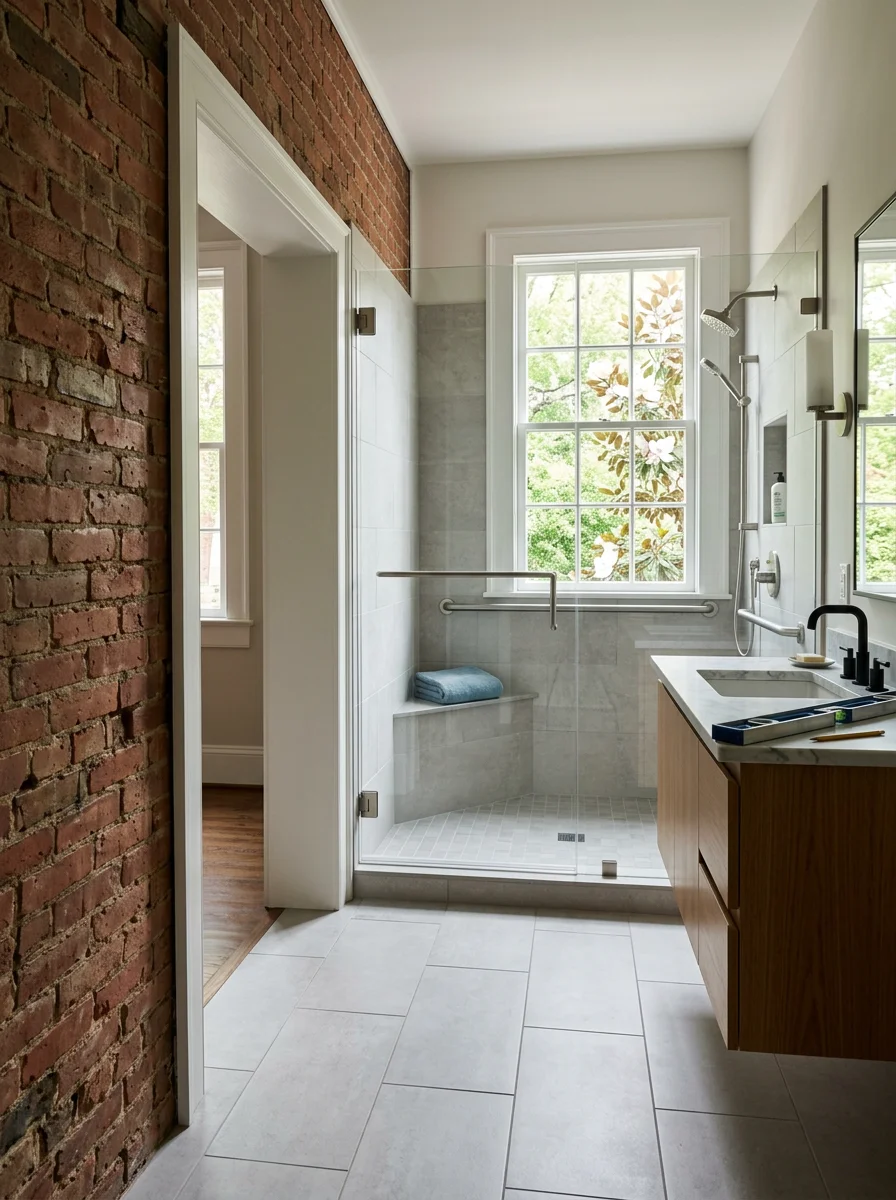
Charlotte's housing stock spans more than a century of construction styles, and accessibility needs vary sharply by neighborhood and era. Dilworth bungalows from the 1920s have small bathrooms with claw-foot tub surrounds and 28-inch doorways. Myers Park homes from the 1940s and 1950s have more generous floor plans but still lack the blocking in walls needed for grab bar support. Newer Ballantyne homes have wider hallways but often have shower entries with a curb that creates a trip hazard.
Charlotte's clay soils shift seasonally, and in older homes that movement can rack door frames out of square over time. A doorway that was originally 30 inches wide may have settled to an effective clearance of 27 inches after decades of soil movement. When we widen doorways for accessibility in Charlotte's older neighborhoods, we assess the frame condition and address any settling before installing the new opening, so the finished width stays true.
Renovation of older Charlotte homes often reveals conditions behind walls that affect the accessibility project scope. Knob-and-tube wiring in pre-1950 homes, aluminum branch-circuit wiring in 1960s and 1970s homes, and galvanized or polybutylene plumbing are common findings in neighborhoods like Plaza Midwood and Eastover. Identifying these conditions during the planning walkthrough, rather than after demolition begins, keeps the project on track and avoids scope changes mid-build.
At a glance
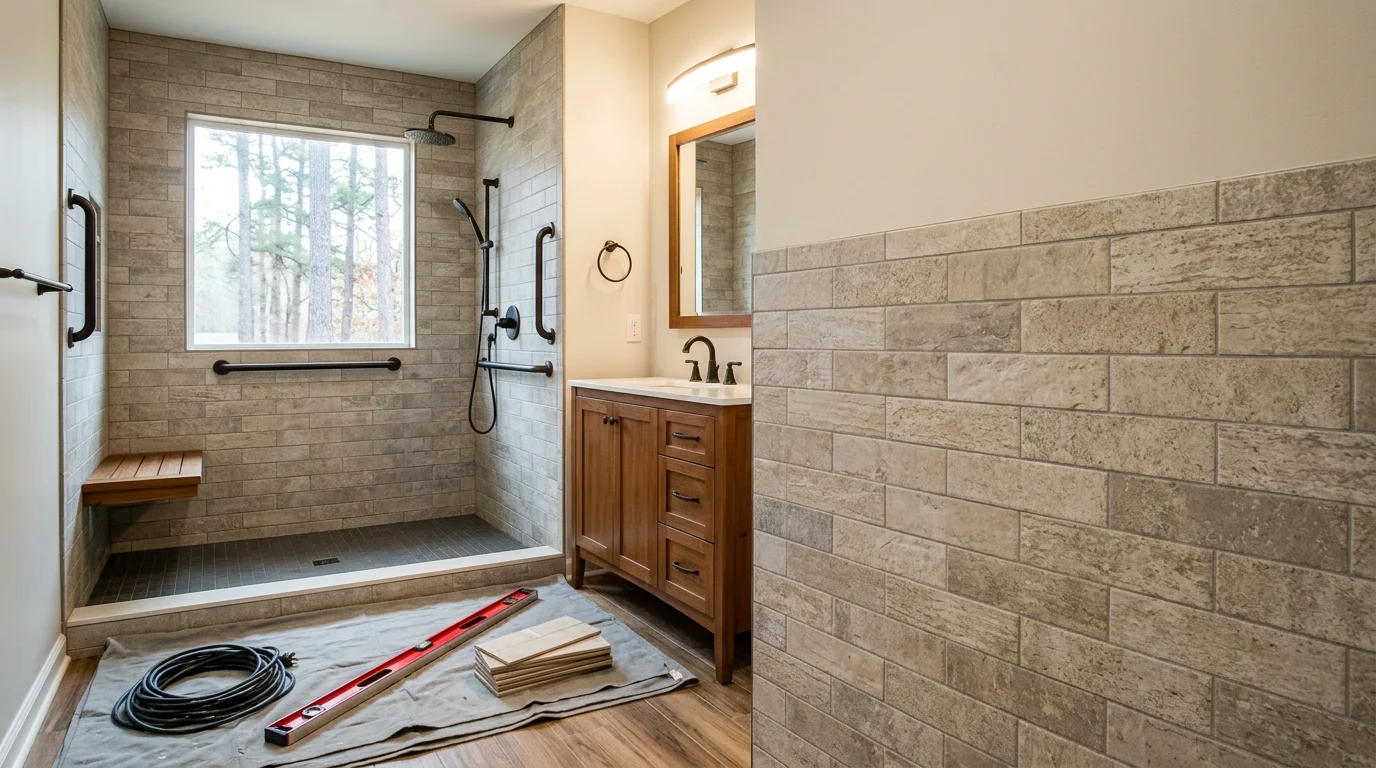
Bathroom remodeling in Charlotte's older in-town neighborhoods frequently involves tub-to-shower conversions, doorway widening, and grab bar installation in homes where the original bathroom footprint is under 45 square feet. General contracting in Mecklenburg County covers permit coordination with the City of Charlotte's Code Enforcement department, which requires plan review and staged inspections for structural and plumbing changes. Remodeling projects in Charlotte's pre-1970 homes often uncover aluminum branch-circuit wiring and galvanized plumbing that need to be addressed before new accessibility fixtures can be safely installed.
Remodeling, renovation, and accessibility work for homes across High Point and the Triad.
Bathroom remodeling and accessible bathroom upgrades for homes in High Point and across NC.
Interior and whole-home remodeling for homeowners across High Point and the Triad.
Worked with us?
Leave a ReviewWorked with us?
Leave a ReviewNo qualifying reviews with text to display yet (only 4+ star reviews with a written comment are shown).
 General contractor
 General contractor
 General contractor
Serving Charlotte, NC
Our crew knows Charlotte, NC. We will show up on time, assess the job honestly, and give you a clear written number before asking you to decide anything.
Also serving across the Piedmont Triad region of North Carolina:
Common questions from Charlotte, NC customers about our services, process, and coverage.
In Charlotte's pre-1970 homes, the most common findings behind walls are aluminum branch-circuit wiring, galvanized supply pipes, and framing that has shifted due to the area's clay soils. These conditions do not stop an accessibility remodel, but they need to be addressed before new fixtures are installed. Identifying them during a planning walkthrough rather than after demolition begins keeps the project scope predictable.
Clay soil in Mecklenburg County expands and contracts with seasonal moisture changes, and in older homes that movement can shift door frames out of square over time. A doorway that appears to be 30 inches wide may have an effective clearance of 27 inches after decades of settling. We check frame condition and address any racking before widening a doorway, so the finished accessible opening stays at the correct width.
Yes. Any bathroom remodel in Charlotte that involves moving plumbing, changing electrical circuits, or making structural changes to walls or doorways requires a permit from the City of Charlotte's Code Enforcement department. The permit process includes plan review and inspections at rough-in and final phases. We manage the permit application and inspection scheduling so the project closes with a clean record.
Call us directly. Real answers, no scripts.
Stop by, call, or book online — we're always nearby when you need us.
Phone
(888) 306-7137Hours